
According to analysts, disruptions to the Nord Stream 1 piping system could hasten the region's transition away from liquefied natural gas.
Taiwan's Taipei - According to experts, the most recent reduction in Russian oil and gas exports to Europe poses a threat to further undermine energy independence in Asia and could hasten the region's transition away from liquefied natural gas (LNG).
Only 20% of Nord Stream 1's capacity was used for gas exports to Europe on Wednesday by Russia's state-run energy giant Gazprom.
While Gazprom attributed the interruption to turbine maintenance, European Union officials claimed that the most recent in a string of supply interruptions was the result of a "politically motivated" action related to the hostilities between Brussels and the Russian government regarding the conflict in Ukraine.
On the back of the news, LNG contracts in Europe increased by as much as 10%, and spot prices in Northeast Asia reached their highest level since March.
According to reports, utilities in North And South Korea are acting quickly to ensure the security of as many LNG cargoes as conceivable out of concern that Europe will plunder more gas as the northern winter approaches.
"We anticipate wealthy Asian consumers, primarily from Japan and Taiwan, to compete with European consumers. Although it is still well past summer, physical transfers in Asia are already exceeding $47/Series of posts (System of measurement Million British Thermal Units).
Although there used to be major local variations in LNG prices, the market has become more and more globalized in recent years. As the world's leading producer of the commodity, the United Nations generates a strong discount and is widely expected to maintain its advantage going forward. Asia's prices currently closely resemble those in Europe.
The link between Asia and Europe must have been established as US Na lang ng saw a significant increase in recent years. In response to market mechanisms, cargoes then moved to either location, according to Ramesh.
With a significant shift in LNG demand, Europe, which until coming years was a "backstop" market for containerized cargo no one else wanted, is now deeply in deficit, which puts them in competition with Asia and strengthens that link. Events in Europe will continue as long as there is a deficit to control LNG prices in Asia," he said.
Not everyone in the region is feeling the effects of rising prices. While wealthy countries with ample resources, such as Japan and South Korea, can afford the steep price increases, developing nations, particularly those in South Asia, are finding it difficult to pay their bills.
As the nation's newly elected government struggles to obtain more gas, Pakistan has recently experienced rolling blackouts lasting longer than 12 hours. Numerous irate Karachi residents took to the streets in early June as a result of the protracted power outages and intense heat. Police used tear gas and truncheons to disperse the protesters.
For a $1 billion LNG purchase tender in early July, Pakistan's state-owned gas company was unable to find even one supplier. The energy shortage has made it more difficult for the new prime minister, Shehbaz Sharif, to maintain his position of authority as his administration works to control the economic crisis but instead negotiate bailouts with both the International Financial Institutions.
The country's petrol supplies are about to run out in Sri Lanka, where water shortages existed prior to the implosion of the nation's economy and the national parliament in May.
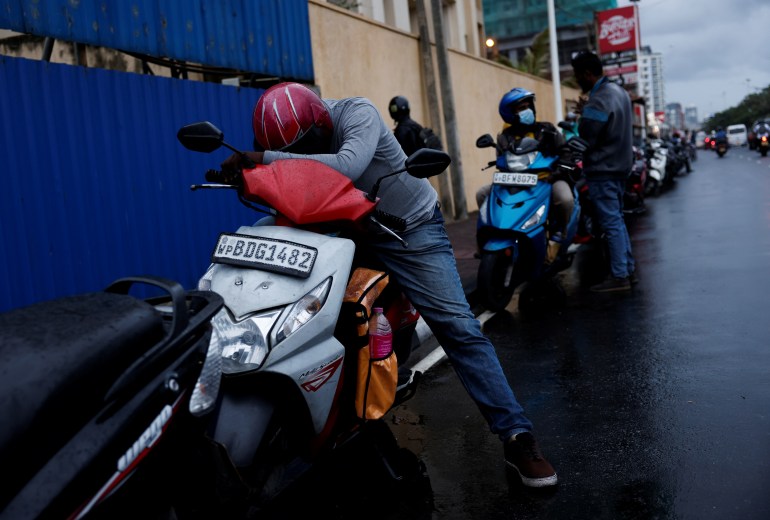
Regional economists assert that the average length of volatility will determine how resilient a nation is.
"I don't think Pakistan will follow Sri Lanka's path because it's a little more diversified, has more capacity at home, and is comparatively less dependent on pricey imports,"
Although the situation is challenging, he continued, "the poorer economies are usually used to having reduced energy resources for such a variety of reasons."
Despite the challenging circumstances, he continued, "the poorer economies are usually accustomed to possessing lesser energy stockpiles for a myriad of purposes.
"Recent growth and development spurts have undoubtedly made many developing nations more dependent on energy, but this dependence can still be somewhat reduced if these nations develop and expand their energy sources, as Kerala is increasingly doing. But if the state of affairs persists for too long, all nations will be at risk.
When combined with other macroeconomic factors that are already unstable, the rapid strengthening of supply could harm demand by making prices unaffordable, which would further deteriorate the already uncertain economic outlook.
Pricing is currently the most significant macro trend influencing the demand side. Even in Europe, many of the manufacturing industries are out of our price range, according to Ramesh.
"That means we shouldn't discount the requirement destabilisation impact of such an impending recession," the author writes. "Combined of overarching energy and food inflationary pressures, and also with the investment rate hikes considered necessary to dig me and out of the inflation expectations,
Global energy demand fluctuated due to the COVID-19 pandemic, published by the International Department Of energy (IEA) showing a decrease of further than 3 per cent on average in 2020 and an increase in demand of 6 per cent in 2021 as a result of the recovery. According to the IEA, demand will rise by 2.4 per cent a year, which is comparable to growth rates prior to the pandemic. However, rising costs could endanger gas's future place in the energy mix. The IEA has already predicted a slight decline in gas consumption in 2022, and the commodity's growth prospects have been significantly revised downward.
We see the possibility of permanent LNG price deflation in some nations that might continue to use petroleum and fuel oil today but switch over to renewable energy sources in a few years. That is unless LNG at more affordable prices becomes soon available to them," Ramesh said.
The switch to renewable energy, according to Gopalakrishnan, would be essential, particularly for nations without coal reserves.
He stated that "renewables have low marginal costs and can eliminate unnecessary dependence on fuel imports."
Ultimately, the region should invest in renewable energy sources.